
Virginia Mugshots & Recent Arrest Bookings
Guide to Virginia arrest photographs, custodial booking logs, and statutory privacy protections. Learn how to verify custody status and request free mugshot removals under Virginia law.
How to Search Virginia Booking Records
Accessing verified public records and custody information requires utilizing authorized Commonwealth channels through verified mugshot removal portal. Follow these structured steps to look up records promptly:
-
1. Query Primary Custodial Facility Rosters
Check local sheriff booking registries or multi-jurisdiction regional jail inquiry databases to verify active holding status, booking dates, and bond amounts.
-
2. Register for Statewide Virginia VINELink Alerts
Search the automated victim notification registry using legal first and last names. Receive real-time SMS or email notifications upon transfer or bond release.
-
3. Review Supreme Court OCIS 2.0 Court Dockets
Access pending charging documents, scheduled bond hearings, and formal trial dockets across General District and Circuit Courts statewide.
-
4. Inquire at the Judicial Magistrate Desk
For immediate bookings not yet published online, contact the 24/7 magistrate office in the jurisdiction of arrest to confirm initial bail terms.
Access the official Commonwealth repositories below to query active arrest records, custody dockets, and inmate holding status:
Search Virginia Arrest Booking Photographs
Query statewide public records by first and last name to verify booking photographs, intake dates, and active court dockets across Virginia facilities.
Top County & City Portals
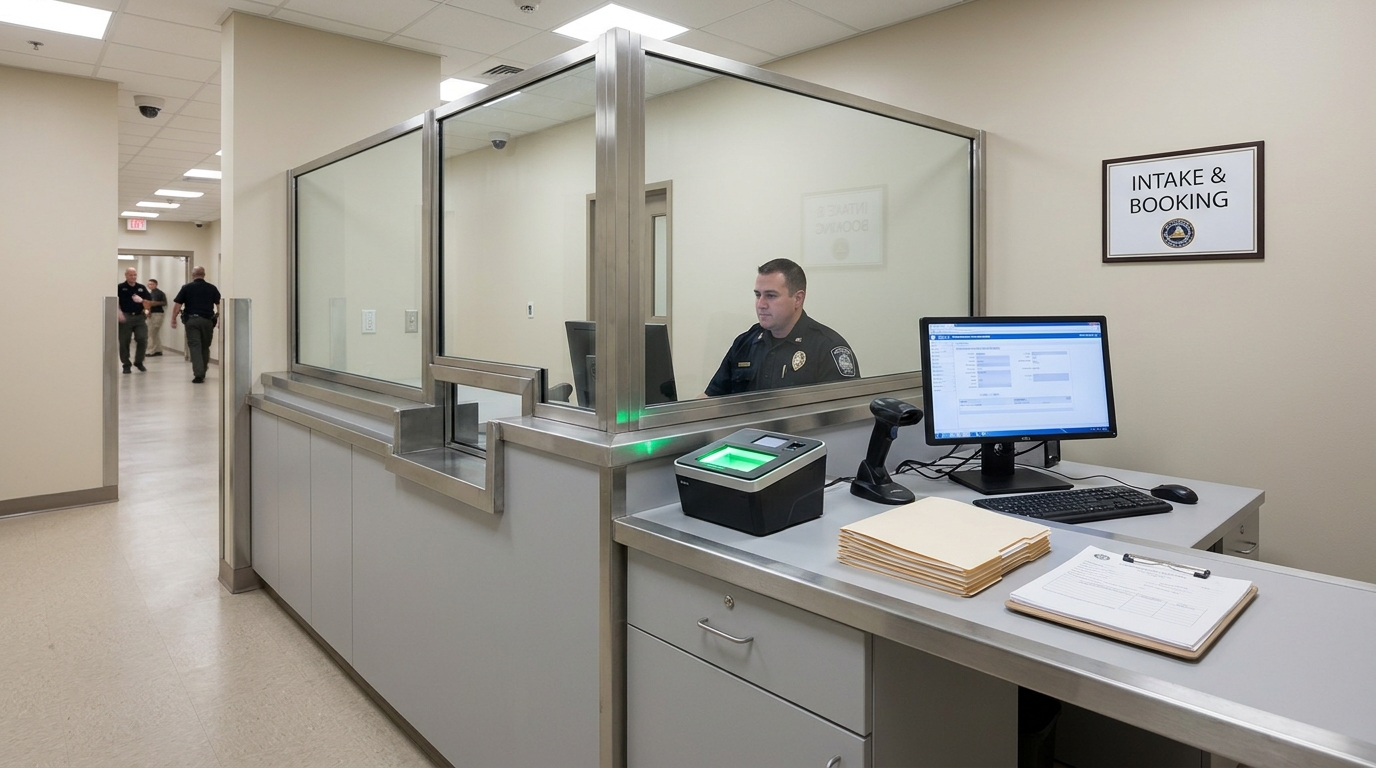
Select a jurisdiction below to inspect specific photographic booking protocols, sheriff records desk procedures, and local custodial intake details.
Norfolk Mugshots →
Norfolk City Jail intake records, records desk verification, and FOIA access.
Virginia Beach Mugshots →
Virginia Beach Correctional Center active inmate roster and booking photos.
Lynchburg Mugshots →
Blue Ridge Regional Jail Lynchburg facility booking photos and intake logs.
Halifax County Mugshots →
BRRJA Halifax Adult Detention Center custodial booking and intake registry.
Henrico County Mugshots →
Henrico County Sheriff Jail West and Jail East inmate inquiry portal.
Amherst County Mugshots →
BRRJA Amherst facility photographic profiling and magistrate bail dockets.
Booking Photo Standards
Under Title 19.2 of the Code of Virginia, criminal booking photography represents a formal administrative procedure executed by law enforcement agencies upon taking an individual into custodial detention.
When an arrest occurs—whether executed by municipal police officers, county deputy sheriffs, or Virginia State Police Troopers—the arrestee is transported to a designated regional jail authority or local detention center for formal intake processing.
Pursuant to Virginia Code Section 19.2-390, intake officers are statutorily required to obtain biometric friction ridge impressions (fingerprints) and standardized digital photographs of every individual arrested for any felony offense or Class 1 and Class 2 misdemeanor.
The photographic capture standard mandates high-resolution front-facing portraits and profile angle views taken against non-reflective neutral backgrounds under calibrated lighting.
These photographic records, commonly called mugshots, are integrated into the subject's Central Criminal Records Exchange (CCRE) file maintained by the Department of State Police.
The primary administrative purpose of booking photography is positive visual identification.
Intake photographs confirm the identity of the incarcerated individual during daily institutional counts, facilitate secure inmate transport between holding facilities and courtrooms, verify identity prior to video visitation sessions, and prevent mistaken releases from physical detention.
Furthermore, these photographs become permanent elements of the criminal history record file transmitted to national criminal databases administered by the Federal Bureau of Investigation.
Photo Access Under FOIA
Public accessibility to law enforcement booking records in Virginia is governed by the Virginia Freedom of Information Act (FOIA), codified in Virginia Code Section 2.2-3706.
The statute establishes a clear legal standard: records of criminal incidents, arrest logs, and booking registers maintained by state and local law enforcement agencies are recognized as public records open for inspection by citizens of Virginia.
However, Virginia statutory law draws a sharp boundary between general arrest information and sensitive investigative files. Under Virginia Code Section 2.2-3706.1, criminal investigative records—including detective field notes, confidential informant identities, forensic examination reports, and surveillance videos—are strictly excluded from mandatory FOIA disclosure.
In contrast, basic arrest blotter entries, including the arrestee's legal name, age, physical description, date and location of arrest, charging statutes, and booking photographs, are categorized as disclosable public government records unless releasing the photograph would compromise an ongoing undercover operation or jeopardize officer safety.
While booking photographs are public records under FOIA, law enforcement agencies maintain significant administrative discretion regarding how those records are disseminated. Some agencies, such as the Virginia Beach Sheriff's Office, provide searchable public inmate rosters online that include booking photographs.
Other jurisdictions, such as the Norfolk Sheriff's Office or Fairfax County Adult Detention Center, restrict online publication to text-based custody logs, requiring members of the public or media representatives to inspect physical records in person or submit a written FOIA request to obtain photographic prints.
Fee Ban Protections (§ 18.2-468.1)
In response to predatory commercial websites that published arrest photographs and demanded exorbitant fees from individuals seeking to have their pictures taken down, the Virginia General Assembly enacted Virginia Code Section 18.2-468.1.
This critical statute fundamentally altered the digital mugshot publishing landscape across the Commonwealth.
Under Virginia Code Section 18.2-468.1, it is strictly unlawful for any person, commercial firm, corporation, or digital publisher that prints, publishes, or disseminates a criminal booking photograph to solicit, demand, or accept any pecuniary consideration, monetary fee, or other asset to remove, delete, or modify the photograph or associated criminal record information.
The statutory ban applies comprehensively across all internet websites, social media channels, and print publications operating within or targeting residents of Virginia.
The statute provides significant civil penalties to deter non-compliance.
Any commercial entity that violates the law is liable to the affected individual for actual damages, or statutory damages of $500 per day for each day the photograph remains published following receipt of a formal written demand for removal, plus reasonable attorney fees and court costs.
In strict accordance with this statute, our public records reference directory operates with zero fees: all record verifications, takedown processing, and search engine delisting assistance are provided completely free of charge.
Statutory Framework Governing Virginia Booking Records
The table below outlines the primary Virginia statutes governing the capture, public disclosure, fee prohibitions, and judicial expungement of criminal booking photographs.
| Virginia Statute | Subject Matter | Legal Standard & Enforcement |
|---|---|---|
| Va. Code § 19.2-390 | Mandatory Booking Fingerprints & Photos | Mandates live-scan biometric capture for all felony and Class 1/2 misdemeanor arrests. |
| Va. Code § 2.2-3706 | Law Enforcement Public Records (FOIA) | Classifies arrest logs and booking blotters as disclosable public records under 5-day rule. |
| Va. Code § 18.2-468.1 | Prohibition on Takedown Fees | Strictly bans charging fees to remove mugshots; imposes $500/day civil statutory penalties. |
| Va. Code § 19.2-392.2 | Circuit Court Record Expungement | Authorizes judicial sealing of police and court records for acquittals and dismissals. |
Circuit Court Expungement and Record Sealing Remedies
For individuals who have been arrested in Virginia and subsequently had their charges resolved favorably, permanent relief is available through the judicial expungement process codified in Virginia Code Section 19.2-392.2.
via jail inmate lookup.Under Virginia law, expungement is not an automatic right; it requires submitting a formal petition to the Circuit Court in the city or county where the criminal proceedings took place.
To qualify for court-ordered expungement under Section 19.2-392.2, the petitioner must show the case concluded without conviction. Qualifying dispositions include an outright acquittal, a formal nolle prosequi, judicial dismissal, or verified identity theft.
Cases that resulted in a finding of guilt, a plea of nolo contendere, or a deferred dismissal pursuant to a conditional plea are generally ineligible for traditional expungement under this statute.
The petitioner files Form CC-1473 with the Circuit Court clerk and obtains a complete set of rolled fingerprints from a local law enforcement agency.
These fingerprint cards are transmitted to the Virginia State Police Central Criminal Records Exchange (CCRE) along with a copy of the petition.
The Commonwealth Attorney is served and given twenty-one days to file responsive pleadings.
If the judge determines upon conducting a hearing that the continued public existence of the arrest record and booking photograph causes a manifest injustice to the petitioner, a final Order of Expungement is entered.
Once entered, the order commands all state, regional, and municipal law enforcement agencies to seal all physical and electronic records, prohibiting disclosure to employers, licensing boards, or public searchers under Virginia Code Section 19.2-392.3.
Virginia Clean Slate Legislation and Automatic Sealing
Recognizing the substantial financial and administrative burdens associated with formal court expungement petitions, the Virginia General Assembly enacted historic Clean Slate legislation under Title 19.2, Chapter 23.2 of the Virginia Code.
This innovative statutory framework establishes two distinct tracks for criminal record clearing: automatic administrative sealing and petition-based court sealing.
Under the automatic sealing provisions, state computer systems administered by the Virginia State Police and the Supreme Court of Virginia will automatically seal records relating to nine specific misdemeanor offenses after a seven-year conviction-free period without requiring the individual to file a court petition or pay filing fees.
Furthermore, charges that resulted in an acquittal, nolle prosequi, or dismissal will be automatically sealed by the state repository.
Once records are sealed under Clean Slate provisions, Virginia Code Section 19.2-392.14 makes it unlawful for employers, educational institutions, landlords, and state professional licensing boards to inquire about, consider, or require disclosure of the sealed criminal arrest records during pre-employment screening, tenancy reviews, or licensing evaluations.
Search Engine Cache Purges
Even after a private web directory deletes an arrest record or a Circuit Court enters an expungement order, residual traces of the booking photograph and arrest summary often remain visible in Google and Bing search results.
This delay occurs because commercial search engine crawlers maintain historical snapshots of web pages in their server caches until their automated robots recrawl the hosting web address.
To accelerate the permanent removal of outdated search snippets and thumbnail previews, individuals can submit direct removal requests using the Google Removals Console and Bing Content Removal portals.
When a user submits the exact URL of a deleted page, the search engine robot queries our web server. Our server immediately returns an HTTP 404 Not Found or HTTP 410 Gone status header, confirming that the content has been permanently erased.
Upon receiving this server confirmation, the search engine automatically purges the cached title, description snippet, and thumbnail image from global search results within 24 to 72 hours.
Comparison of Record Removal & Sealing Pathways
The table below summarizes the different legal and administrative options available to individuals seeking to clear arrest records and booking photos in Virginia.
| Remedy Category | Controlling Entity | Processing Time | Financial Cost |
|---|---|---|---|
| Circuit Court Expungement | Local Circuit Court | 3 to 6 Months | Court filing fee + fingerprint processing. |
| Clean Slate Auto-Sealing | Virginia State Police CCRE | Automatic after 7 Years | $0 (Funded by Commonwealth). |
| Directory Takedown Request | arrestsorgva.org Compliance | 24 to 48 Hours | $0 (Strictly Free under Va. Code § 18.2-468.1). |
| Search Engine Cache Purge | Google / Bing Webmaster | 24 to 72 Hours | $0 Free Webmaster Console Submission. |
FOIA Appeals (§ 2.2-3713)
When citizens or legal representatives request public booking logs and arrest registries under Virginia Code Section 2.2-3706, public law enforcement agencies are statutorily required to furnish the disclosable records within five business days.
In instances where an agency wrongfully withholds public arrest registries or fails to provide an authorized statutory exemption explanation under Title 2.2, Virginia law provides a direct legal remedy.
Under Virginia Code Section 2.2-3713, any citizen denied public records rights may file a formal Petition for Mandamus or Injunction against the non-compliant agency in the local General District Court or Circuit Court.
The court is required to schedule an expedited hearing within seven business days. If the presiding judge determines that the agency violated FOIA mandates, the court enters an order compelling immediate production of the arrest records.
Furthermore, if the statutory violation was committed willfully and knowingly, the court must assess mandatory civil penalties ranging from $500 to $2,000 against individual public officers, payable into the state Literary Fund.
Juvenile Booking Record Protections Under Title 16.1
A vital statutory boundary within Virginia public records law governs juvenile custody records.
Under Virginia Code Section 16.1-301, all law enforcement records, arrest blotters, and booking photographs concerning children under eighteen years of age are classified as strictly confidential and shielded from public inspection.
Virginia law establishes strict criminal penalties for unlawful dissemination of juvenile booking records.
Unless a juvenile is formally transferred to Circuit Court for trial as an adult upon specific violent felony indictments under Section 16.1-269.1, publishing, distributing, or commercializing juvenile mugshots is a criminal misdemeanor under Virginia Code Section 16.1-309.
Our platform strictly adheres to these statutory safeguards, rejecting and permanently suppressing any record involving minor juveniles.
Record Dissemination Precedents
The legal boundaries governing public access to criminal arrest records and booking photographs in the Commonwealth have been shaped by decisive rulings from the Supreme Court of Virginia and the Court of Appeals of Virginia.
In landmark interpretations of the Virginia Freedom of Information Act, the appellate courts have established that while individual citizens possess legitimate privacy interests in their personal biographical data, the public maintains an overriding constitutional and statutory interest in monitoring governmental law enforcement activities.
Judicial precedent confirms that an arrest blotter entry or booking photograph created by custodial officers during intake is a government record documenting public police power.
Because the state exercises physical detention over a human being, public transparency ensures accountability against secret detentions or unlawful confinement.
However, Virginia courts have simultaneously affirmed that the publication of booking photographs does not diminish the presumption of innocence guaranteed under Article I, Section 8 of the Virginia Constitution, nor does it preclude an individual from obtaining complete judicial relief through Circuit Court expungement or statutory takedown remedies.
CCRE Order Distribution
When a Circuit Court judge grants an expungement petition under Virginia Code Section 19.2-392.2, the legal decree triggers a coordinated statewide administrative process.
Under Virginia Code Section 19.2-392.3, the Clerk of the Circuit Court must transmit certified copies of the final Expungement Order directly to the Department of State Police Central Criminal Records Exchange (CCRE) in Richmond.
Upon receipt of the judicial order, CCRE compliance officers execute physical and digital sealing operations. All friction ridge fingerprint cards, photographic booking negatives, digital mugshot files, and computer database entries referencing the expunged arrest are removed from public search registries.
Furthermore, the State Police transmit formal compliance notices to the arresting municipal police department, the local sheriff's office, and the regional jail authority that housed the individual, commanding each entity to seal all internal records and destroy indexing references within sixty days.
Once sealed, Virginia Code Section 19.2-392.4 establishes that any custodian of records who willfully discloses expunged criminal records without a court order is guilty of a Class 1 misdemeanor.