
Norfolk Mugshots & Recent Arrest Bookings
Access public booking photos, recent custodial arrest intake logs, and judicial case dockets for Norfolk. Virginia law guarantees free removal of booking photos upon case dismissal or acquittal.
How to Search Norfolk Booking Records
Accessing verified public records and custody information requires utilizing authorized Commonwealth channels through verified norfolk arrest records. Follow these structured steps to look up records promptly:
-
1. Query Primary Custodial Facility Rosters
Check local sheriff booking registries or multi-jurisdiction regional jail inquiry databases to verify active holding status, booking dates, and bond amounts.
-
2. Register for Statewide Virginia VINELink Alerts
Search the automated victim notification registry using legal first and last names. Receive real-time SMS or email notifications upon transfer or bond release.
-
3. Review Supreme Court OCIS 2.0 Court Dockets
Access pending charging documents, scheduled bond hearings, and formal trial dockets across General District and Circuit Courts statewide.
-
4. Inquire at the Judicial Magistrate Desk
For immediate bookings not yet published online, contact the 24/7 magistrate office in the jurisdiction of arrest to confirm initial bail terms.
Access the official Commonwealth repositories below to query active arrest records, custody dockets, and inmate holding status:
Direct Mugshot & Inmate Inquiry for Norfolk
Utilize the search interface below to access public arrest photographs, booking data, and pending court hearing schedules across Virginia databases.
Photographic Booking Process
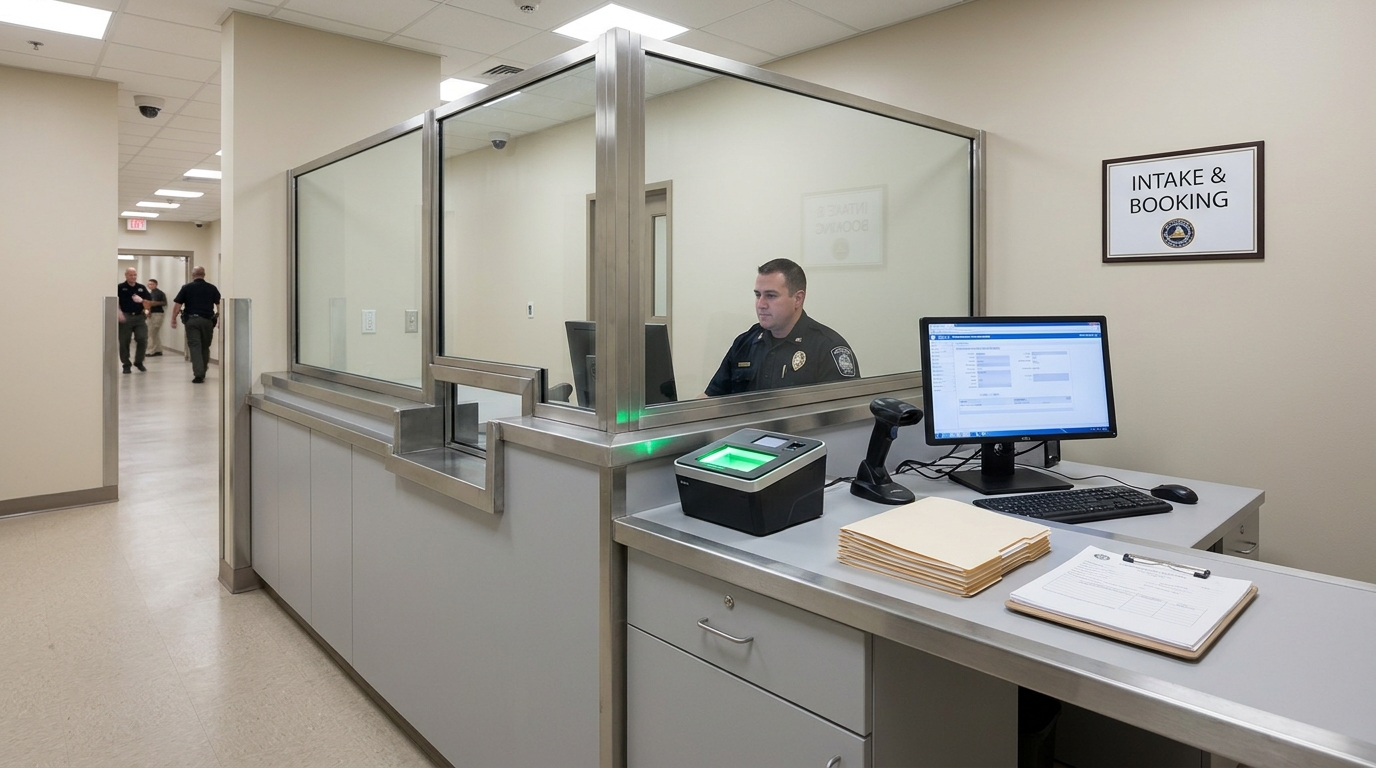
In accordance with statutory criminal justice standards across the Commonwealth of Virginia, criminal booking photography represents an indispensable component of custodial intake.
When an individual is placed under arrest by law enforcement officers within Norfolk—whether by municipal police officers, deputy sheriffs, or Virginia State Police Troopers—the arrestee is promptly transported to Norfolk City Jail located at 811 E. City Hall Avenue, Norfolk, VA 23510.
Upon physical arrival at the intake sally port, custodial booking officers initiate biometric indexing mandated by Virginia Code Section 19.2-390.
This statute mandates that every person arrested for any felony charge or Class 1 and Class 2 misdemeanor must be biometrically fingerprinted and photographed. The photographic procedure entails capturing high-resolution digital color portraits from both direct frontal and ninety-degree profile orientations.
Standardized neutral gray backgrounds and calibrated law enforcement lighting ensure optical uniformity, eliminating shadows and preserving facial metrics for biometric classification.
These intake images, commonly referred to as mugshots, serve multiple vital functions within the criminal legal structure.
Primarily, they provide immediate positive visual identification to ensure that the individual appearing before the judicial magistrate and attending subsequent Circuit Court arraignments corresponds precisely to the individual identified on the underlying criminal arrest warrant or summons.
Furthermore, these photographic records are incorporated into the arrest dossier transmitted electronically to the Central Criminal Records Exchange (CCRE) administered by the Department of State Police in Richmond.
Photo Legal Status (§ 2.2-3706)
Under the Virginia Freedom of Information Act (FOIA), codified in Virginia Code Section 2.2-3706, criminal incident summaries, arrest registries, and intake logs compiled by law enforcement agencies are recognized as public records.
Virginia law balances public transparency regarding governmental police operations with individual privacy considerations.
While ongoing criminal investigative files, witness identities, and juvenile justice records remain strictly exempt from public disclosure under Section 2.2-3706.1, basic arrest blotters and booking logs are public documents accessible to citizens of the Commonwealth.
Norfolk Sheriff's Office does not host a live public mugshot gallery on the internet; custody verification and photographic records are accessed via in-person terminal at the records desk or through written Virginia FOIA requests.
Citizens and members of the news media seeking inspection of public booking logs can file formal public records requests directed to the public records liaison at the Norfolk Sheriff's Office.
By statutory mandate, the agency must provide a substantive written response within five business days.
The agency may furnish the requested booking log extract, request an authorized statutory extension of seven working days for voluminous compilations, or state specific statutory exemptions justifying non-disclosure pursuant to Title 2.2.
Fee Ban Protections (§ 18.2-468.1)
The Commonwealth of Virginia enacted landmark legislation under Virginia Code Section 18.2-468.1 to decisively prohibit predatory commercial practices surrounding the dissemination of criminal arrest records and booking photographs.
This robust statute establishes that it is unlawful for any individual, commercial corporation, or internet publisher that displays, disseminates, or publishes criminal booking photographs to solicit, demand, or accept any monetary consideration, fee, or financial asset in exchange for removing, deleting, or modifying the photograph or associated personal identifying data.
Commercial website operators that violate this statutory prohibition incur severe civil liability.
The statute authorizes aggrieved individuals to recover actual damages or statutory damages of $500 per day for each day the photograph remains publicly posted following receipt of a formal written demand, in addition to reasonable attorney fees and litigation costs.
In complete compliance with this Virginia statute, our public records reference portal operates with absolute zero removal fees.
Any individual whose charges resulted in dismissal, acquittal, nolle prosequi, or who has obtained an expungement order can submit an expedited takedown submission 100% free of charge.
Booking Administration

The table below provides a detailed structural comparison of the custodial housing facility, primary arresting agencies, and photographic record repositories serving Norfolk.
| Administrative Category | Assigned Agency or Facility | Public Access Protocol |
|---|---|---|
| Primary Detention Center | Norfolk City Jail | In-person intake verification, automated victim notification (VINELink). |
| Law Enforcement Agency | Norfolk Sheriff's Office | Written FOIA requests under Va. Code § 2.2-3706 (5-day response clock). |
| Judicial Circuit Court | 4th Judicial Circuit Court Clerk | Online Case Information System (OCIS 2.0) public case docket search. |
| Bail Magistrate Office | 4th Judicial Circuit Magisterial District | 24/7 public desk for warrant status inquiry and bond processing. |
Expungement Petitions (§ 19.2-392.2)
For citizens in Norfolk seeking the permanent legal destruction of booking photographs and associated criminal police records, the formal judicial mechanism is codified in Virginia Code Section 19.2-392.2.
via virginia beach mugshots.Under Commonwealth law, expungement is not an automatic right upon arrest; rather, it is reserved specifically for individuals who were wrongly accused, individuals acquitted of criminal charges following trial, individuals whose prosecutions were terminated via nolle prosequi, or individuals who received an outright dismissal without an admission of guilt or formal finding of sufficient evidence.
Initiating the expungement process requires filing a formal Petition for Expungement (Form CC-1473) with the Clerk of the 4th Judicial Circuit Circuit Court. The petitioner must attach certified copies of the underlying criminal warrants or indictment sheets reflecting the favorable judicial disposition.
Subsequently, the petitioner must report to a local law enforcement facility to provide a complete set of rolled biometric fingerprints on public applicant fingerprint cards.
These cards are forwarded to the Virginia State Police Central Criminal Records Exchange along with the petition copy to compile a certified criminal history transcript for judicial review.
The Commonwealth Attorney representing Norfolk is formally served with the petition and possesses twenty-one days to file responsive pleadings.
Upon conducting an evidentiary hearing, if the presiding Circuit Court judge determines that the continued existence and public accessibility of the arrest record and booking photograph causes a manifest injustice to the petitioner, a final Order of Expungement is entered.
This judicial decree commands the Department of State Police, local sheriff departments, regional detention authorities, and municipal police forces to seal all physical and electronic records from public view pursuant to Virginia Code Section 19.2-392.3.
Clean Slate Record Sealing
In addition to court-petitioned expungements, the General Assembly of Virginia passed historic criminal justice reforms establishing automatic record sealing under Title 19.2, Chapter 23.2 of the Virginia Code.
Known as Clean Slate legislation, this comprehensive statutory structure establishes automated protocols whereby state computer repositories seal eligible misdemeanor arrest records and dismissed charges without requiring citizens to hire private legal counsel or pay court filing fees.
Under the automated framework, charges resulting in acquittal, dismissal, or nolle prosequi will be electronically sealed across state criminal databases.
Furthermore, nine specific misdemeanor conviction categories—including minor trespass, disorderly conduct, and possession of marijuana—become eligible for automatic sealing following a seven-year conviction-free period.
Once records are sealed under Clean Slate provisions, Virginia Code Section 19.2-392.14 strictly protects individuals by making it unlawful for prospective employers, landlords, educational institutions, or state licensing boards to inquire into or consider the sealed arrest data during employment or tenancy evaluations.
Search Engine Delisting
Even after obtaining a court expungement order or successfully submitting a takedown request to private web publishers, digital artifacts such as cached search engine snippets and thumbnail images may temporarily persist across external search engines like Google, Bing, and DuckDuckGo.
This phenomenon occurs because search crawler robots index web pages periodically rather than continuously.
To eliminate outdated search results, individuals can utilize the Google Removals Console and Bing Content Removal portals. By submitting the exact URL of the deleted booking page, search engine webmaster systems inspect the host server.
Upon detecting an HTTP 404 Not Found or HTTP 410 Gone status code—which our server immediately generates following takedown execution—the search engine automatically purges the cached record, title snippet, and thumbnail preview from search query index results within 48 to 72 hours.
Removal & Sealing Remedies
The table below compares the primary legal and technical pathways for removing arrest records and booking photographs in Virginia.
| Remedy Category | Controlling Authority | Statutory Timeframe | Required Documentation |
|---|---|---|---|
| Circuit Court Expungement | 4th Judicial Circuit Circuit Court | 3 to 6 Months | Form CC-1473, certified court disposition, VSP fingerprint card. |
| Clean Slate Auto-Sealing | Virginia State Police CCRE | Automatic after 7 Years | Zero application required; verified via statewide database audit. |
| Website Takedown Request | arrestsorgva.org Compliance | 24 to 48 Hours | Case docket number, dismissal proof, or free online takedown form. |
| Search Engine Cache Purge | Google / Bing Webmaster | 24 to 72 Hours | HTTP 404 / 410 URL submission via webmaster removal portals. |
Biometric Intake (§ 19.2-390)
The capture of criminal booking photographs is intrinsically linked to biometric fingerprint processing under Virginia Code Section 19.2-390. During intake booking at the detention center, arresting officers and booking deputies utilize automated live-scan electronic fingerprinting terminals.
These biometric terminals capture friction ridge impressions from all ten fingers, palms, and side writer edges, transmitting the digitized biometric packets directly to the Virginia State Police Central Criminal Records Exchange (CCRE) in Richmond and the Federal Bureau of Investigation (FBI) Next Generation Identification (NGI) database.
This automated biometric transmission generates a unique State Identification Number (SID) and FBI Universal Control Number (UCN) assigned permanently to the arrestee. The booking photograph is permanently linked to this biometric profile.
This synchronization ensures that even if an individual provides a fraudulent alias, fictitious date of birth, or counterfeit identification during a police street encounter, live-scan biometric processing establishes positive criminal identification within minutes, cross-referencing active arrest warrants across all national jurisdictions.
Digital Destruction Protocols
When an individual submits a verified takedown request following an acquittal, nolle prosequi, or court-ordered expungement, our compliance team enforces permanent digital record destruction.
Under Virginia Code Section 18.2-468.1, once eligibility is confirmed, all associated digital assets must be purged without administrative delays.
Our technical protocol entails completely deleting the high-resolution intake photograph from our primary media storage clusters, removing textual booking metadata from active database partitions, and invalidating cached image files across all Content Delivery Network (CDN) edge servers within 24 hours.
Concurrently, our web servers return HTTP 410 Gone status headers to web search crawlers, instructing search engine robots to remove cached previews and snippets from organic search results.
Record Dissemination Precedents
The legal boundaries governing public access to criminal arrest records and booking photographs in the Commonwealth have been shaped by decisive rulings from the Supreme Court of Virginia and the Court of Appeals of Virginia.
In landmark interpretations of the Virginia Freedom of Information Act, the appellate courts have established that while individual citizens possess legitimate privacy interests in their personal biographical data, the public maintains an overriding constitutional and statutory interest in monitoring governmental law enforcement activities.
Judicial precedent confirms that an arrest blotter entry or booking photograph created by custodial officers during intake is a government record documenting public police power.
Because the state exercises physical detention over a human being, public transparency ensures accountability against secret detentions or unlawful confinement.
However, Virginia courts have simultaneously affirmed that the publication of booking photographs does not diminish the presumption of innocence guaranteed under Article I, Section 8 of the Virginia Constitution, nor does it preclude an individual from obtaining complete judicial relief through Circuit Court expungement or statutory takedown remedies.
CCRE Order Distribution
When a Circuit Court judge grants an expungement petition under Virginia Code Section 19.2-392.2, the legal decree triggers a coordinated statewide administrative process.
Under Virginia Code Section 19.2-392.3, the Clerk of the Circuit Court must transmit certified copies of the final Expungement Order directly to the Department of State Police Central Criminal Records Exchange (CCRE) in Richmond.
Upon receipt of the judicial order, CCRE compliance officers execute physical and digital sealing operations. All friction ridge fingerprint cards, photographic booking negatives, digital mugshot files, and computer database entries referencing the expunged arrest are removed from public search registries.
Furthermore, the State Police transmit formal compliance notices to the arresting municipal police department, the local sheriff's office, and the regional jail authority that housed the individual, commanding each entity to seal all internal records and destroy indexing references within sixty days.
Once sealed, Virginia Code Section 19.2-392.4 establishes that any custodian of records who willfully discloses expunged criminal records without a court order is guilty of a Class 1 misdemeanor.