
Virginia Inmate Search & Locator
Locate active inmates across Virginia county detention centers, multi-jurisdiction regional jails, and state correctional institutions. Query booking rosters and register for automated release notifications.
How to Search Virginia Inmates
Locating an incarcerated individual in Virginia requires identifying whether custody is maintained at a local jail, regional detention facility, or state correctional institution through verified arrests org directory. Follow these verified steps to locate an inmate efficiently:
-
1. Query Local & Regional Jail Rosters
Access the public daily booking ledger or active inmate search tool of the regional facility serving the county or city where the arrest occurred.
-
2. Register for Virginia VINELink Alerts
Query the statewide victim notification service using legal first and last name. Opt in for SMS or email alerts to track real-time changes in custody status.
-
3. Review Supreme Court OCIS 2.0 Dockets
Search upcoming court appearances, bail hearings, and formal charging documents across General District and Circuit Courts statewide.
-
4. Search VADOC Offender Locator
For felons serving active state prison terms exceeding twelve months, search the Department of Corrections database using the inmate's 7-digit state ID.
Access the official Commonwealth repositories below to query active arrest records, custody dockets, and inmate holding status:
Local Jails Versus Multi-County Regional Facilities
In major metropolitan jurisdictions such as Fairfax County, Virginia Beach, Norfolk, Richmond City, Henrico County, and Arlington County, local sheriff offices operate dedicated adult detention complexes.
Conversely, smaller counties and independent cities participate in regional jail compacts authorized under Virginia Code Section 53.1-106. For example, the Blue Ridge Regional Jail Authority operates facilities across Central Virginia, while the New River Valley Regional Jail serves the southwestern mountain counties.
Searching for an inmate requires checking the specific regional jail database that provides detention services for the arresting county or city.
VADOC Offender Locator
For individuals serving extended felony prison sentences, the Virginia Department of Corrections maintains an electronic Offender Locator database. Members of the public can search by the offender seven-digit state identification (SID) number or legal first and last name.
The VADOC database reveals the current housing institution (such as Sussex I, Red Onion, Greensville, or Buckingham Correctional Center), primary felony offense convictions, projected release dates, and mandatory parole eligibility dockets under Virginia truth-in-sentencing standards.
Custody Search Portals
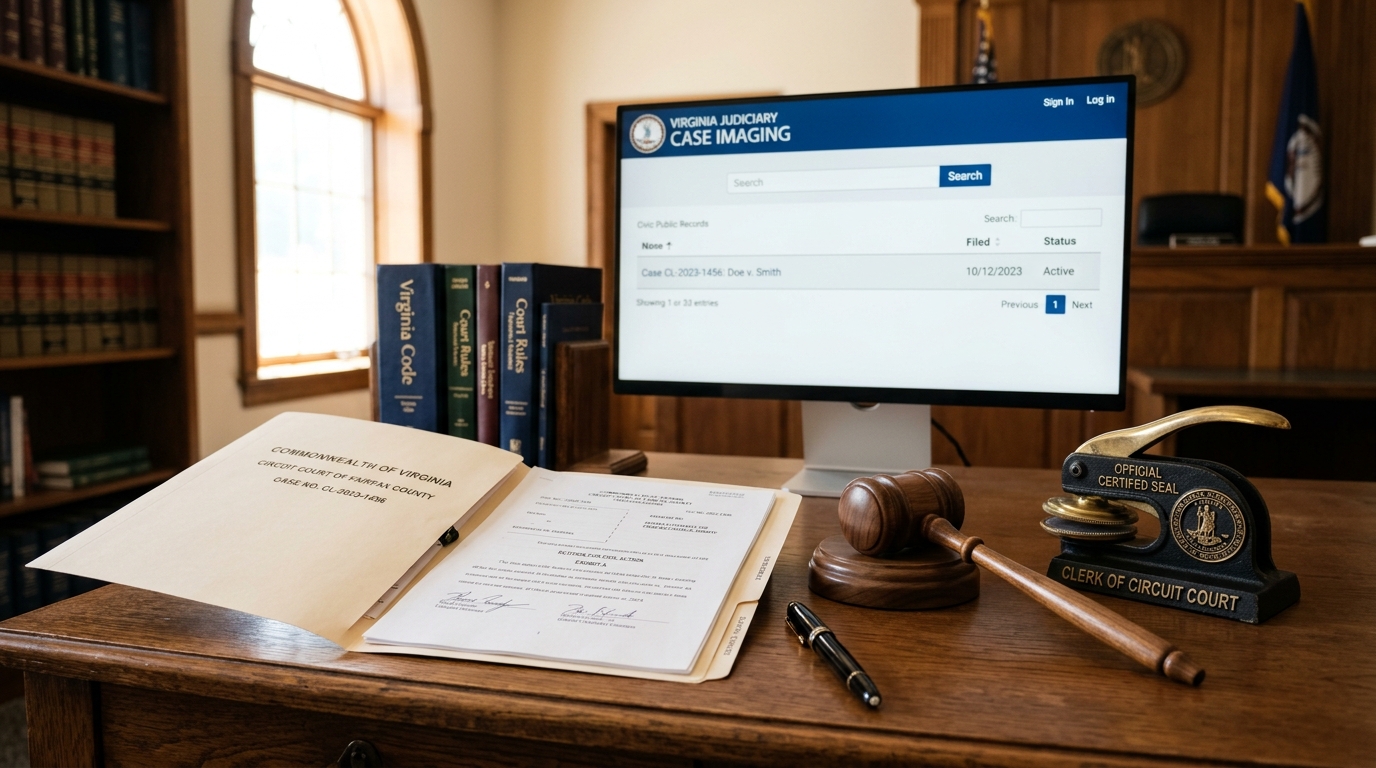
Selecting the appropriate search channel depends on the arrest date, sentencing status, and custody category of the detained individual. The table below details primary search channels across Virginia.
| Custody Tier | Operating Entity | Target Population | Primary Lookup Method |
|---|---|---|---|
| Local County / City Jails | Constitutional Sheriffs | Recent arrests, pre-trial detainees, sentences under 12 months | County sheriff website, telephone booking desk, VINELink |
| Regional Jail Authorities | Regional Jail Boards (§ 53.1-106) | Multi-county pre-trial detainees & local misdemeanants | Regional jail online search portal & central intake desk |
| State Prison Facilities | Virginia Dept of Corrections | Convicted felons serving sentences exceeding 1 year | VADOC Offender Locator & central records office |
| Juvenile Detention Centers | Dept of Juvenile Justice (DJJ) | Minors under 18 charged with juvenile offenses | Confidential; accessible only to parents & defense counsel |
VA-VINE Notification Alerts
For family members, crime victims, and legal representatives seeking real-time custody alerts, the Commonwealth of Virginia participates in the nationwide Victim Information and Notification Everyday (VINELink) network.
Virginia VINELink interfaces directly with county sheriff databases, regional jail management platforms, and VADOC data exchanges.
Users can register confidentially online or by telephone to receive automated SMS text messages, telephone notifications, or email alerts whenever an inmate custody status changes, including transfers to other facilities, court appearance departures, bond releases, or sentence discharges.
How to Register for Virginia VINELink Alerts
Registration requires providing the inmate legal first and last name or offender identification number. Once the profile is located, users select preferred notification channels and establish a secure four-digit personal identification number (PIN) used to confirm receipt of automated telephone alerts.
Virginia VINELink operates twenty-four hours a day, providing continuous monitoring free of charge to any concerned citizen or victim of crime under Virginia Code Section 19.2-11.01.
Court Docket Inquiries
When searching for individuals who may have been arrested and released on bond prior to jail roster updates, searching the judicial case management system provides complete verification.
The Supreme Court of Virginia Online Case Information System covers all General District Courts and Circuit Courts across the Commonwealth.
Searching by defendant name reveals active misdemeanor charges, preliminary felony certifications, filed arrest warrants, upcoming court hearing dates, and appointed legal counsel details.
District Court Dockets Versus Circuit Court Dockets
General District Court dockets reveal initial appearance arraignments and bond review dates held immediately following arrest. Circuit Court records display felony grand jury indictments, trial schedules, and formal sentencing orders.
Both systems display whether an individual has active capias writs or failure-to-appear warrants issued due to missed court dates, providing critical insight into potential pending detention status.
Visitation & Trust Accounts
Once an inmate housing facility is confirmed, communicating with the detainee requires complying with strict administrative standards established by the Virginia Board of Local and Regional Jails and Virginia Department of Corrections.
Facilities enforce structured regulations governing in-person contact visits, offsite video visitation sessions, telephone accounts, postal mail screening, and commissary fund deposits.
Video Visitation Scheduling and Approved Visitor Lists
Most Virginia county and regional detention centers utilize digital video visitation platforms provided by approved vendors such as Securus Technologies, GTL (ViaPath), or ICSolutions.
Visitors must register an account online, submit valid government photo identification, and schedule visiting sessions at least twenty-four hours in advance. Inmates must designate visitors on their pre-approved visitation list during initial classification.
Visitors must adhere strictly to facility dress codes, prohibiting revealing attire, hats, and electronic recording devices.
Inmate Trust Accounts and Commissary Funding
Detainees in Virginia correctional facilities maintain personal trust fund accounts used to purchase hygiene items, writing materials, snack foods, and prepaid telephone minutes.
Friends and family can deposit funds into inmate trust accounts through online portal services, automated lobby kiosks located at facility intake centers, or telephone deposit lines.
Cash deposits are accepted at lobby kiosks, while online deposits accept major credit and debit cards subject to administrative processing fees.
Pretrial Release Verification
When an individual secures bail authorization from a judicial magistrate or General District Court judge, processing pre-trial release from a Virginia detention facility requires several administrative verifications.
Jail intake deputies conduct local warrant checks across municipal registries and run statewide VCIN and national NCIC queries to ensure no outstanding detainer writs, parole violation warrants, or out-of-county holds exist against the detainee.
Once identity verification is completed, property collected during intake is returned, and public release paperwork is signed certifying the defendant commitment to appear at all scheduled court proceedings.
Commercial Bail Bondsmen Regulations in Virginia
If an inmate receives a secured bond that the family cannot post in full cash, licensed Virginia commercial bail bondsmen can be engaged to guarantee the bond.
Regulated under Virginia Code Section 9.1-185 through Section 9.1-185.18 by the Virginia Department of Criminal Justice Services (DCJS), bail bondsmen are legally restricted to charging standard statutory premiums, generally between ten and fifteen percent of the total bond face amount.
Demanding excessive fees or unlicensed surety activities is strictly illegal under Virginia criminal statutes.
Inmate File Access & FOIA
The public right to inspect inmate booking rosters and criminal charges is anchored in Virginia Code Section 2.2-3706 of the Virginia Freedom of Information Act.
via active warrant search.Under this statutory mandate, law enforcement custodians must disclose the identity of arrested persons, offense classifications, arrest locations, and investigating officers.
However, internal institutional disciplinary reports, medical and mental health records, and tactical detention center blueprints are explicitly exempt from public inspection to protect inmate privacy and institutional facility security.
Inmate Phone Rates & Tariffs
Telephone communications between detained individuals in Virginia correctional facilities and their families are governed by strict administrative rules enforced by the Virginia Board of Local and Regional Jails and the State Corporation Commission.
Inmates cannot receive incoming telephone calls under any circumstances; all telephone communication must be initiated by the detainee on an outbound basis.
Calls are placed either as traditional collect calls billed directly to the recipient landline or through prepaid calling accounts managed by approved communications vendors such as Securus Technologies, GTL (ViaPath), or PayTel.
Audio Recording Disclosures and Privileged Legal Calls
Every telephone call placed by an inmate in a Virginia adult detention center or regional facility begins with an automated recorded advisory informing both parties that the conversation is recorded and subject to monitoring by correctional intelligence staff.
The sole statutory exception to this monitoring policy applies to verified attorney-client communications.
In order to protect constitutional Sixth Amendment rights, defense attorneys must register their administrative office telephone numbers with the jail facility administration in advance to ensure privileged legal conferences remain strictly confidential without recording.
Habeas Corpus & Pretrial Appeals
When an individual is detained without bail or faces unlawful custody conditions, Virginia criminal procedure provides explicit judicial review channels under Title 19.2.
If a judicial magistrate denies bail under Virginia Code Section 19.2-120, defense counsel can immediately file a formal Motion for Bond Modification before a General District Court judge.
If the district court denies release or sets an unattainable bond, the accused possesses the statutory right under Virginia Code Section 19.2-124 to appeal the bail determination directly to the Circuit Court, where an evidentiary hearing is conducted de novo.
Habeas Corpus Petitions (§ 8.01-654)
In cases where an individual is held in physical custody without lawful process, or where constitutional due process protections were fundamentally violated during arrest and intake, the detainee can file a formal Petition for a Writ of Habeas Corpus in the Circuit Court under Virginia Code Section 8.01-654.
The writ commands the holding sheriff or regional jail superintendent to present the prisoner before the bench and demonstrate lawful statutory authority justifying continued physical incarceration.
Indigent Defense & Public Defenders
Detainees who lack financial resources to retain private criminal defense counsel are evaluated during court arraignment for eligibility under Virginia indigency standards codified at Virginia Code Section 19.2-159.
The Virginia Indigent Defense Commission (VIDC) operates dedicated public defender offices across major jurisdictions, including Alexandria, Arlington, Fairfax, Richmond, Norfolk, and Virginia Beach.
Public defenders advocate on behalf of qualifying defendants during initial bail hearings, preliminary probable cause proceedings, plea negotiations, and jury trials in Circuit Court. This appointed legal representation guarantees that detained citizens receive zealous constitutional advocacy regardless of individual financial circumstances.
Inmate Communication Platforms
The table below summarizes common communication, mail inspection, and commissary deposit platforms utilized across Virginia correctional facilities.
| Service Category | Common Approved Vendors | Access Channel | Operational standards |
|---|---|---|---|
| Telephone Calls | Securus, GTL / ViaPath, PayTel | Prepaid calling accounts or collect calls | Outbound only; subject to recording except attorney calls. |
| Video Visitation | Securus Video Connect, ViaPath Visit | Home web browser or mobile phone app | Pre-scheduled 20-30 minute sessions; fee per minute. |
| Trust Fund Deposits | Access Corrections, TouchPay, JPay | Online web portals & lobby cash kiosks | Funds credited immediately to inmate commissary books. |
| Postal Mail Screening | TextBehind, Smart Communications | Centralized scanning processing hubs | Letters scanned and delivered electronically to prevent contraband. |
VADOC vs Local Jail Custody
A critical distinction in Virginia criminal custody lies between local responsible inmates housed in municipal or regional jails and state responsible offenders committed to the Virginia Department of Corrections (VADOC).
Under Virginia Code Section 53.1-20, individuals sentenced to a period of confinement exceeding one year upon felony convictions become state responsible inmates.
Following final sentencing in the Circuit Court, these individuals are temporarily held in local facilities while awaiting formal intake and security classification transfer to a designated VADOC state correctional center or penitentiary.
Locating an offender committed to state custody requires utilizing the Virginia Department of Corrections Offender Locator search system. The VADOC database tracks incarcerated individuals across all state major institutions, correctional field units, and work centers using the seven-digit VADOC Offender Identification Number.
In contrast, individuals awaiting trial or serving misdemeanor sentences under twelve months remain classified as local responsible inmates and are maintained exclusively on local jail rosters.
Trust Accounts & Commissary
Virginia detention facilities prohibit incarcerated individuals from possessing physical currency. Upon initial custodial intake, all cash found on the arrestee is inventoried and credited to an individual institutional trust account.
These funds enable inmates to purchase essential personal hygiene supplies, writing materials, supplemental food products, and over-the-counter medical remedies from the facility commissary catalog.
Family members can deposit funds into an inmate's trust account through authorized third-party electronic money transfer platforms, computerized lobby kiosks located at the detention facility, or postal money orders addressed to the inmate with their formal booking ID.
Virginia Code Section 53.1-42 regulates inmate account deductions, permitting detention authorities to automatically deduct room-and-board fees, medical co-payments, and restitution assessments from deposits in accordance with local jail operating policies.
Interstate Offender Supervision
Under the Interstate Compact for Adult Offender Supervision (ICAOS), codified in Virginia Code Section 53.1-176.1, individuals subject to active probation or parole supervision in another jurisdiction who are arrested within Virginia must undergo formal interstate verification.
The local judicial magistrate or Commonwealth Attorney consults the national compact registry to determine whether a compact violation warrant or detainer exists.
When an out-of-state compact detainer is lodged against an incarcerated individual in Virginia, the subject is typically held without bond pending a compact violation hearing or extradition proceedings.
Communication between the Virginia Department of Corrections compact administrator and the sending state governs whether the offender will be returned to the sending jurisdiction or permitted to resolve outstanding Virginia charges prior to transfer.